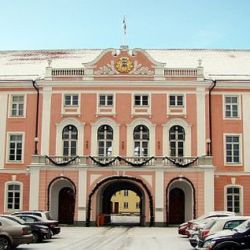
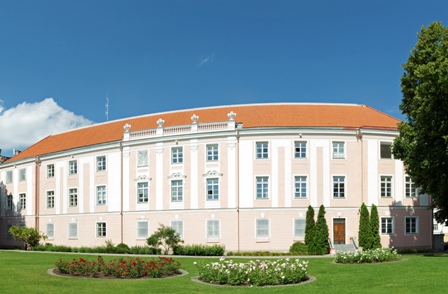
 London UK, 3rd March, 2015.– Voters in Estonia elected a new Parliament on 1st March with 30% of participating voters casting their ballot online.
The country has the longest-standing and most technologically advanced internet voting system in the world. The 176,328 i-voters who used the system represent an increase of 25% since the Parliamentary elections in Estonia in 2011, and reaffirm the growth in the adoption of i-voting which dates back to 2005 when only 9,317 citizens voted online.
Commenting on the rising popularity of i-voting, Smartmatic’s CEO Antonio Mugica said: “The growth of online voting in Estonia should not come as a surprise to anybody. Besides offering clear benefits to voters, in terms of convenience, accessibility and ease of use, the voting platform is built on tried and secure technologies”.
In 2014, Smartmatic, the world’s leader in election automation, and Cybernetica, Estonia’s leading IT lab, co-founded the Centre of Excellence for Internet voting. The Centre is working with the government of Estonia to advance Internet voting nationally, and to export it to many other countries around the globe.
Estonian civil society is the most connected in the world – every citizen has an online ID card, which has biometric information about them and digital signing capabilities. Both Prime Minister Taavi Rõivas and President Toomas Hendrik Ilves have been keen advocates of i-voting on social media.
“Estonia is one of the most digitised countries in the world and boasts an impressive culture of e-government,” stated Michael Summers, Internet Voting Director of Smartmatic. “With a committed vision, backing of the political parties, technological support from leading ICT experts, and strong leadership from the National Electoral Committee (VVK), Estonia offers its citizens a more accessible, secure and transparent voting experience to more effectively serve a modern electorate.”
“We are delighted to have partnered with Cybernetica – the developer of the most advanced internet voting solution in our industry. Its knowledge and expertise will be key as we strive to help governments address the challenges of encouraging people to vote, and continue our mission of harnessing technology to further the progression of democracy in the 21st century.”
The Estonian Parliament Elections in numbers:
- I-voters: 176,328 (a 30% of the total voters participating).
- Total increase in i-votes since the last elections in 2014: 71%.
- Total increase in i-votes since last parliamentary elections in 2011: 25%
- Days to i-vote: 7.
- Average time to cast an i-vote: between 1 ½ and 2 minutes.
- 5.71% of all i-votes came from Estonians living abroad, specifically from 116 countries such as Finland, United Kingdom, Sweden, Germany, Norway and USA.
- 12% of the i-voters used Mobile-ID for authentication.
- 4.3% of the i-voters verified their vote using the smartphone app.
- 53% of i-voters were women.
![[The Guardian] Should Britain introduce electronic voting?](https://sgo.com/wp-content/uploads/2021/09/guardian_logo_01.png)
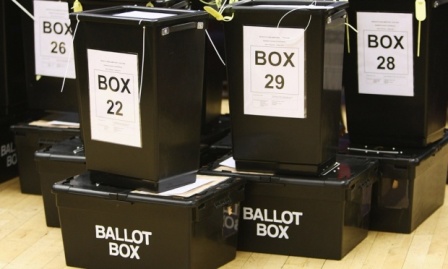 London, 26 February 2015.- "The reason to bring technology into the election process is to increase integrity and security, but it has a series of important collateral benefits." That’s what Antonio Mugica, Smartmatic’s CEO, said to Alex Hern, technology reporter for The Guardian, who wrote an article analyzing whether or not Britain should embrace electronic voting.
Antonio explained that besides bringing significant cost reductions, electronic voting would also increase "security and integrity would be 10 to a hundredfold better." Also, with e-voting auditability would be guaranteed, as Smartmatic recommends "to perform 17 different audits, before, during and after the election."
Meanwhile, Michael Summers, also from Smartmatic, talked about online voting and the Estonian Internet voting experience. With a committed vision, backing of the political parties, technological support from ICT experts, and strong leadership from the National Electoral Committee (VVK), this nation -the most connected in the world-, has been able to guarantee that a vote cannot be given away, stolen or forced.
Read the complete article here.
![[The Baltic Course] E-voters number posts a new record in Estonia](https://sgo.com/wp-content/uploads/2021/09/baltic_course.png)
Tallinn, Estonia 25 February 2015.- A report from The Baltic Course confirmed that more than 155,000 Estonians citizens have voted electronically during the Riigikogu elections, already establishing a new record for this type of voting.
During the last elections -the 2014 European Parliament elections- 103,151 people voted online, as opposed by the 176,491 people that by Wednesday had i-voted, according to the Estonian National Electoral Committee website. This number exceeded by far the 150,000 people expected to vote electronically.
The electoral body opened the Internet voting period from February 19 until February 25.
Since i-voting was introduced in Estonia ten years ago, the percentage of voters choosing this method to cast their vote has increased continuously.
The popularity of i-voting in Estonia was the recent subject of a study carried out by Kristjan Vassil and Mihkel Solvak, two political researchers at the University of Tartu, confirming that different population groups have embraced the internet voting solution equally.
Voting online has proven to be easy and secure. Here is a video on how Estonians vote using the i-voting system:
Vimeo.
![[The Guardian] John Bercow calls for online voting in 2020 general election](https://sgo.com/wp-content/uploads/2021/09/guardian_logo.png)
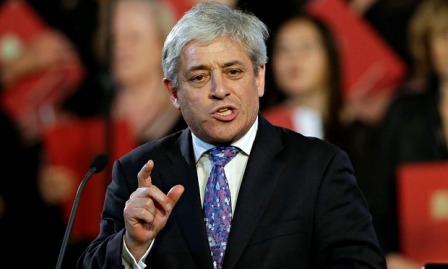 London, 26 January 2015.- On January 26, the Commission on Digital Democracy published its report Open Up, which offered recommendations on the use of digital technologies to make the Parliament more transparent, inclusive, and more prepared to engage citizens with democracy.
The option of online voting in the 2020 general election was one of the many conclusions proposed by the Commission headed by the House of Commons Speaker and member of the Commission on Digital Democracy John Bercow.
In a conversation with BBC Radio 4’s, Bercow observed that there is a growing appetite for online voting and 2020 “could be the first election in which people have the opportunity – they’re not under any obligation – to vote online.”
"In a year where we reflect on our long democratic heritage, it is imperative that we look also to the future and how we can modernise our democracy to meet the changing needs of modern society", commented Bercow.
The Commission on Digital Democracy investigates the opportunities digital technology can bring for parliamentary democracy in the UK.
Read the full article here.
![[BBC Newsbeat] Would online voting help engage more young people in politics?](https://sgo.com/wp-content/uploads/2021/09/bbc_logo.jpg)
 London, 21 January 2015.- Antonio Mugica, director of SGO, spoke with Newsbeat’s politics reporter, Greg Dawson, about the growing global trend towards implementing voting technologies.
In the article, Mugica highlights the fact that, by increasing the options voters have to cast a ballot –at the polling station or via online–, election commissions could help increase engagement and participation.
You can read the complete article in BBC Newsbeat.

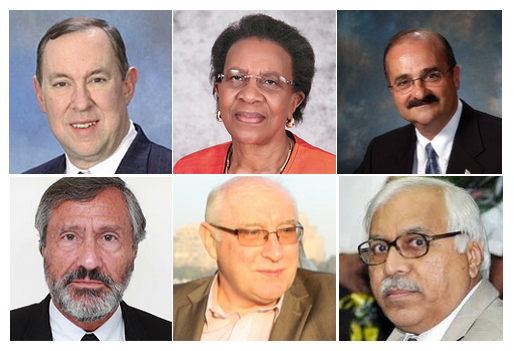 London, 20 January, 2015.- Richard W. Soudriette, founding President of the International Foundation for Electoral Systems (IFES) from 1988 to 2007, and now President of the Centre for Diplomacy and Democracy in Colorado, USA, has been appointed Chairman of the International Elections Advisory Council (IEAC), established by Smartmatic, the world’s leader in election automation.
Along with Mr. Soudriette, five high profile members have been announced: Torquato Jardim, Law Professor and author, magistrate at the Federal Supreme Electoral Tribunal of Brazil, considered to be one of the top specialists in Electoral Law in Brazil; Brigalia Bam, a celebrated and awarded author, educator, organizer, and holder of various high-level posts throughout her long career, among them Chairperson of the Independent Electoral Commission of South Africa; Charles Lasham, a renowned global expert with more than 30 years providing technical election assistance to over thirty countries around the globe, and administering elections in the UK; S.Y. Quraishi, former Chief Election Commissioner, head of the Electoral Commission of India; and Paul DeGregorio, former Executive Vice President and Chief Operating Officer of the International Foundation for Election Systems (IFES), Director of Elections for St. Louis County, Missouri, and former chairman of the United States Election Assistance Commission (EAC).
“I am very excited to be able to lead this council, comprised of colleagues fully aligned with my life-long devotion, namely, building stronger democracies and better run elections”, Richard Soudriette stated.
The Council will advise on new technologies and systems with the goal to attain maximum transparency and efficiency in democratic electoral processes around the world.
Antonio Mugica, CEO of Smartmatic, commented; “Globally we are seeing declining voter turnout and electoral participation as democracies worldwide face the challenge of keeping their citizens fully engaged in the democratic process. Professional election administration and the use of new election technologies both play a central role in guaranteeing the credibility and efficiency of elections in the eyes of the voters.
The IEAC will advise Smartmatic and election officials on strategies and solutions that will promote maximum efficiency, transparency and trust in the election process.”
![[New Statesman] Read Mark Malloch-Brown’s thoughts on internet voting in the New Statesman](https://sgo.com/wp-content/uploads/2021/09/New-Statesman-logo.png)
 SGO Chairman’s Mark Malloch Brown shared some ideas on the developing landscape of internet voting in The Staggers, The New Statesman’s rolling politics blog.
In his piece, Mark highlights how during the last decade, voter turnout in the UK general elections has plummeted and how -by contrast- turnout in younger democracies is much higher. This phenomena is partly due "to a new shift we are seeing towards alternative voting methods."
Mark writes about the shifting tendencies towards technology-based voting methods that improve -among others- counting speed, results proclamation, accessibility and the inclusion of people that were usually left out for educational circumstances. He also points out how these new technologies could be used to motivate and improve the voting experience for UK citizens.
You can read the complete article in The New Statesman.
![[Financial Times] Lord Mark Malloch-Brown to chair election technology group SGO](https://sgo.com/wp-content/uploads/2021/09/financial_times_logo_04.jpg)
 London, 25 November 2014.- "There’s nothing more powerful in terms of reallocating resources among the poor than effective democracy which allows the poor a political voice." That’s what Lord Mark Malloch-Brown, recently appointed as Chairman of Smartmatic, the world’s leading provider of election technology, said to Murad Ahmed, European Technology Correspondent for the Financial Times.
Malloch-Brown will also chair SGO, a new venture based in London which will become the parent company to Smartmatic and other companies to be launched next year. He explained how he has taken up his new role because he believes that promoting fair elections in emerging nations is "the best way to fulfil international development goals."
Antonio Mugica, Smartmatic’s CEO and co-founder, will continue in his role in the enlarged group. Also on the board are Sir Nigel Knowles, Global CEO of DLA Piper, renowned entrepreneur David Giampaolo and Roger Piñate, Smartmatic’s COO.
To read the complete interview, go to the Financial Times.
![[CNN] Richard Quest interviews Mark Malloch-Brown, SGO chairman](https://sgo.com/wp-content/uploads/2021/09/MarkMallochBrown_CNN_03.png)
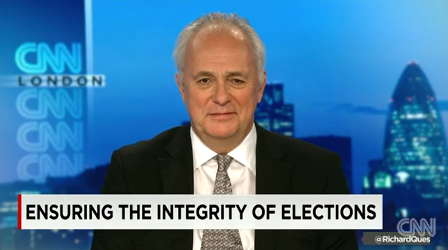 London, 25 November 2014.- Lord Mark Malloch-Brown, the new Chairman of SGO spoke to CNN news anchor, Richard Quest, on the flagship news programme "Quest means Business", about how the new company will ensure the integrity of elections around the world. He spoke about how cutting edge technology has the potential to tackle issues around elections, by making democracy more accessible to the people.
Malloch-Brown explained how SGO’s subsidiary company, Smartmatic empowers people to have a say in their country’s future and to hold governments accountable. He referred to how the company has set the industry standard ensuring maximum accuracy in results.
Watch the interview here:
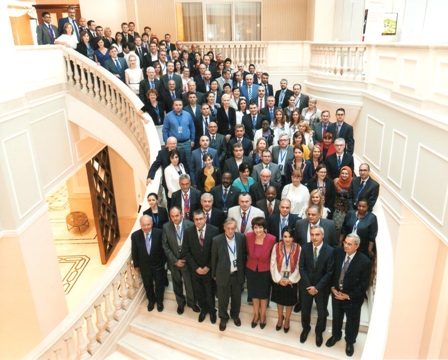
Londres, Septiembre 11, 2014.- Smartmatic, líder mundial en tecnología y servicios de votación, presentó su enfoque holístico de la administración electoral durante la vigésima tercera Conferencia Anual de la Asociación de Oficiales Electorales de Europa (ACEEEO).
Al comentar sobre el exitoso modelo de Smartmatic, su CEO Antonio Mugica, dijo "Una elección, para ser transparente y eficiente, requiere algo más que buena tecnología. Las comisiones electorales deben acoplar tecnología con una metodología de gestión de proyectos y servicios de calidad para así garantizar el éxito. Justamente nosotros en Smartmatic hemos venido integrando desde el 2004 estos tres elementos en las soluciones que hemos proporcionado, con grandes resultados".
La reunión de la ACEEEO, celebrada del 4 al 6 de septiembre, en Bucarest, Rumania, reunió a más de 150 comisionados electorales de todo el mundo que intercambiaron ideas sobre dos temas previstos: "La participación de las mujeres en el proceso electoral y la vida pública" y la "Planificación de una elección general".
Por su parte, Zsolt Szolnoki, Secretario General de la ACEEEO, aseguró que "la realización de una elección general es uno de los proyectos más desafiantes que una nación puede llevar a cabo. Los entes electorales necesitan coordinar y administrar medidas legislativas, administrativas, de planificación, logísticas y de financiamiento para ejecutar un proceso transparente y eficiente que arroje resultados legítimos".
Juan Campodónico, representante de Smartmatic en Rumania, explicó cómo la compañía ha logrado un éxito sin precedentes en proyectos a gran escala. "Las elecciones son complejas. Sin embargo, con nuestras soluciones y nuestra metodología única de proyectos, hemos logrado proyectos exitosos en entornos difíciles y cronogramas ajustados. Por ejemplo, en 2010, realizamos en Filipinas las elecciones con el mayor número de escáneres ópticos desplegados, y en 2009 habíamos completado en Bolivia el registro biométrico más rápido del mundo, 5 millones de personas en 75 días”.
Durante la conferencia, Smartmatic presentó el PARmobile, un equipo portátil todo-en-uno para capturar información biométrica y biográfica; la VIU-500, un dispositivo de mano para autenticar a los votantes; y la SAES-3376, una avanzada máquina de votación con pantalla táctil.